
Nostalgic Neon Nights
Cinema Night #1

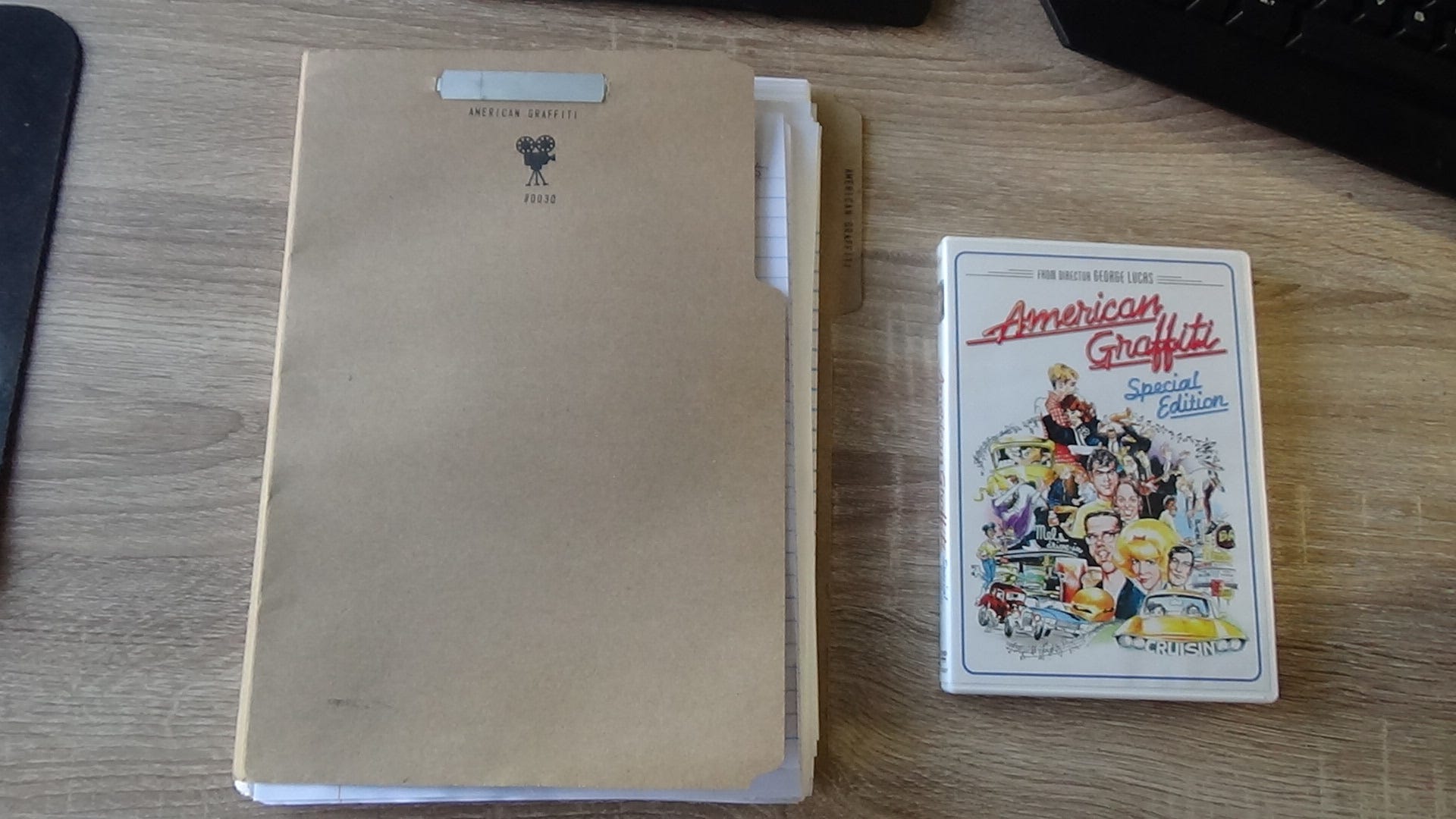
I recently watched American Graffiti (1973) and thought I should do an analysis of the film in terms of storytelling techniques we can employ as writers.
This article WILL contain spoilers for the movie.
Starting with a Great Premise
The kernel of American Graffiti began after the commercial failure of THX 1138. George Lucas’s friend, Francis Ford Coppola, suggested writing something more accessible than science fiction (this is before Star Wars).
As artists we sometimes recoil (or possibly foam at the mouth) when someone suggests writing to market, but there’s something to be said for tapping into something as powerful as nostalgia. Nearly everyone misses something about the past.
While George Lucas might be better known for Star Wars, his first great invention was not a spaceship but a time machine.
Write What you Know
For this film, 3 of the 4 characters are based on different phases of Lucas’s teenage years. He started out as Terry, grew into someone like John Milner, and ended up as someone like Curt.
Writing from our own experiences adds layers of sincerity that simply cannot be replicated, and by writing about phases of his own life, Lucas introduced the theme of change with ease, having changed between versions of himself over time.
Thematic Variation
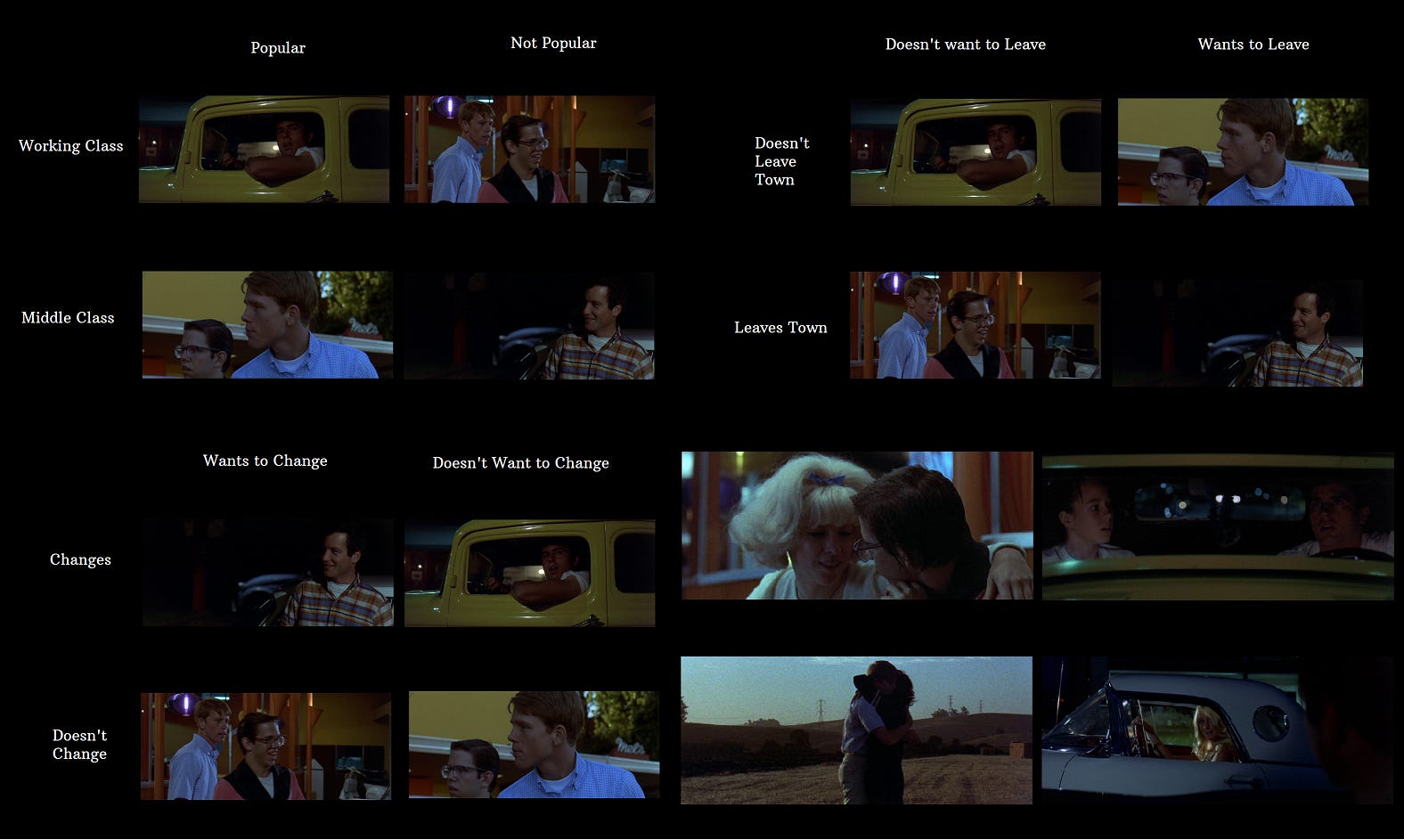
One of the best things (IMHO) about Truby’s Anatomy of Story is the idea of thematic variation and organizing it around a “thematic rectangle,” in which different characters represent different aspects of a theme.
While studying this film, it became apparent to me that the four different characters each represented different aspects of different themes and ideas. By stacking thematic variation in layers, characters that could have been rudimentary caricatures are instead portrayed with considerable depth.
And by pairing up characters who are the opposite of each other in different ways, each of them is forced to confront their own shadows.
Deconstruction Done Right
Although American Graffiti is a portrait of nostalgia, Lucas balances this with a nuanced deconstruction, with the theme of change being a necessary part of life.
Keeping the theme subtle allows the viewer to reflect on the great meaning while also enjoying the nostalgic elements constructively.
En Garde, Avant Garde!
One of the great joys of reading books written by fellow indie authors is the palatable passion and originality put into every page.
I thought of that while listening to the director’s commentary of this film, in which Lucas recalls that his great success has been from taking creative risks.
Dare to dream. Dare to be different. Dare to write.
Video Review
You can find a somewhat long video review here.
Continuing Cinema Nights?
I normally review indie books on my Substack and wrote this for a change of pace. If you’d like to see more posts like this, please like or leave a comment.
About Me
Sean Emonts lives in Texas and is the author of The Sandcastle in the Rain.
It cracks me up that the vehement crash in the very beginning with Terry on the scooter was completely unscripted. You can tell that was a hell of a knock the actor took, and Lucas left it in because it came off so well.
Thanks for this. Keep on! +1
I’m familiar with Graffiti…but don’t think I ever knew Lucas was responsible for it. Never would’ve guessed that!!!